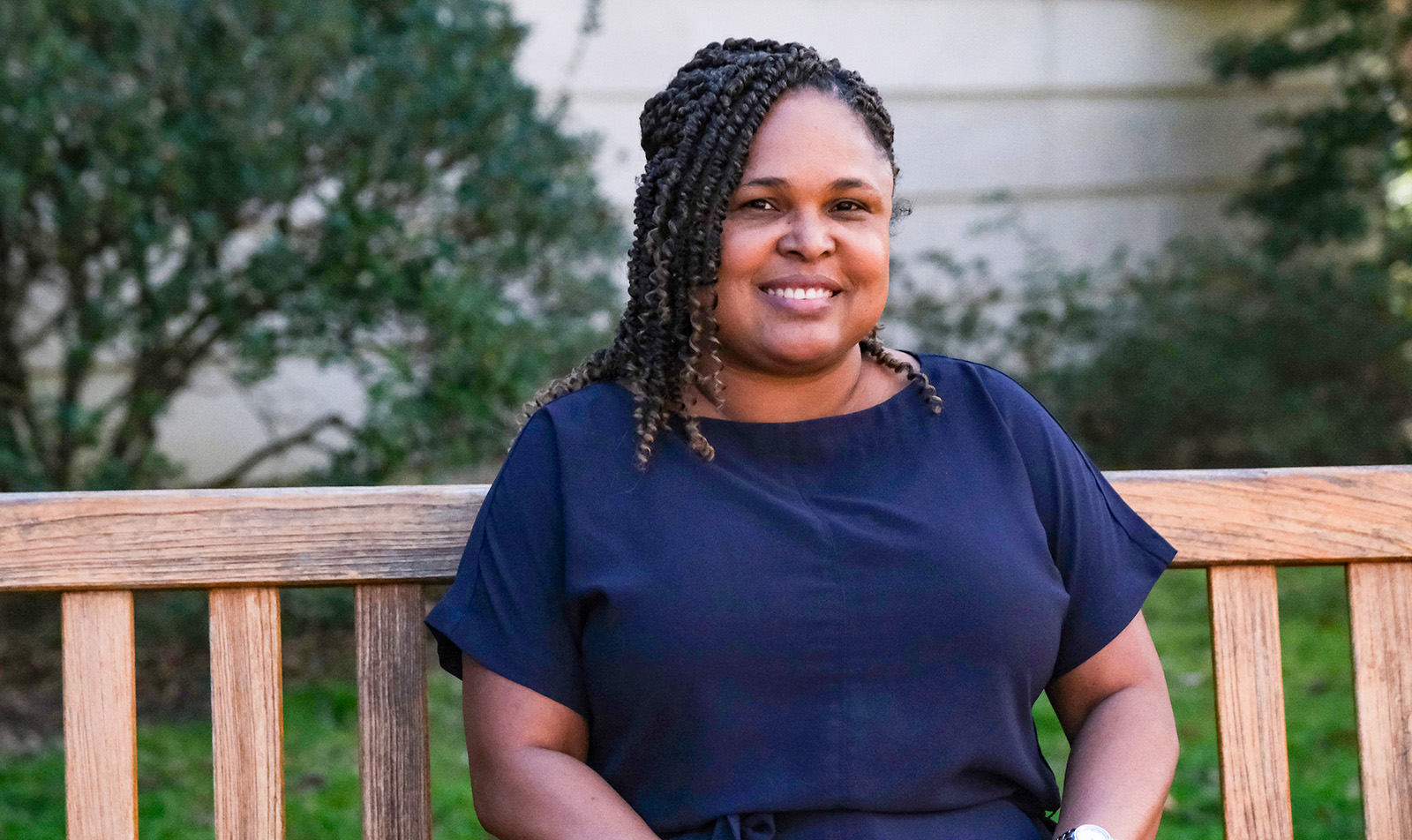
Helyne Frederick, Ph.D., director of the UNC School of Education’s Human Development and Family Science program and director of Interprofessional Education and Practice, has been selected as a fellow in the Atlantic Coast Conference Academic Leaders Network.
Hosted by a consortium of ACC universities, the Academic Leaders Network is an intensive, multi-institutional leadership development program designed for experienced academic leaders. The program brings together faculty and administrators from across ACC campuses to strengthen leadership skills, share best practices, and foster cross-institutional collaboration. Participants attend three leadership conferences hosted at different member universities and engage in ongoing networking and project development opportunities, with the Office of the Executive Vice Chancellor and Provost sponsoring travel-related expenses for UNC-Chapel Hill participants.
Frederick joins a cohort of campus leaders selected to represent the University, including colleagues from the School of Nursing, School of Medicine, Gillings School of Global Public Health, and the College of Arts and Sciences.
Since 2017, Frederick has served as director of the HDFS program, where she oversees curriculum and leads the program’s internship placement process. She works closely with campus and community partners to prepare students for careers in allied health, human services, and related fields. Her leadership extends to faculty governance, including service on the Faculty Executive Committee.
“Being selected for the ACC Academic Leaders Network is an honor and a meaningful opportunity for my professional growth,” Frederick said. “Engaging with academic leaders across institutions around issues that impact faculty and students is especially valuable.”
Frederick’s research examines familial and extra-familial factors associated with risky sexual behaviors among adolescents and young adults, particularly Black and Caribbean youth. Using both qualitative and quantitative methods, her work has explored reproductive health communication between adolescents and their mothers, including interviews with Grenadian youth and cross-cultural studies of women’s perceptions of sexual health communication and related behaviors.
Frederick’s current work focuses on preparing career-ready students and strengthening experiential learning. With support from the Elevate Fixed-Term Faculty Grant from the Provost’s Office, she is expanding campus and community partnerships and developing video resources that highlight career pathways in allied health and human services. She is also analyzing data from a qualitative study on professional well-being and self-care among family life educators across the United States, examining how they navigate professional demands while sustaining their well-being.
“I see this experience strengthening collaboration within the School by helping us think more intentionally about how we address shared challenges in higher education,” Frederick said. “The conversations and relationships developed through the network will shape how I approach program leadership, faculty service, and partnership-building, and how I advocate for practices that support equity, excellence, and student success.”