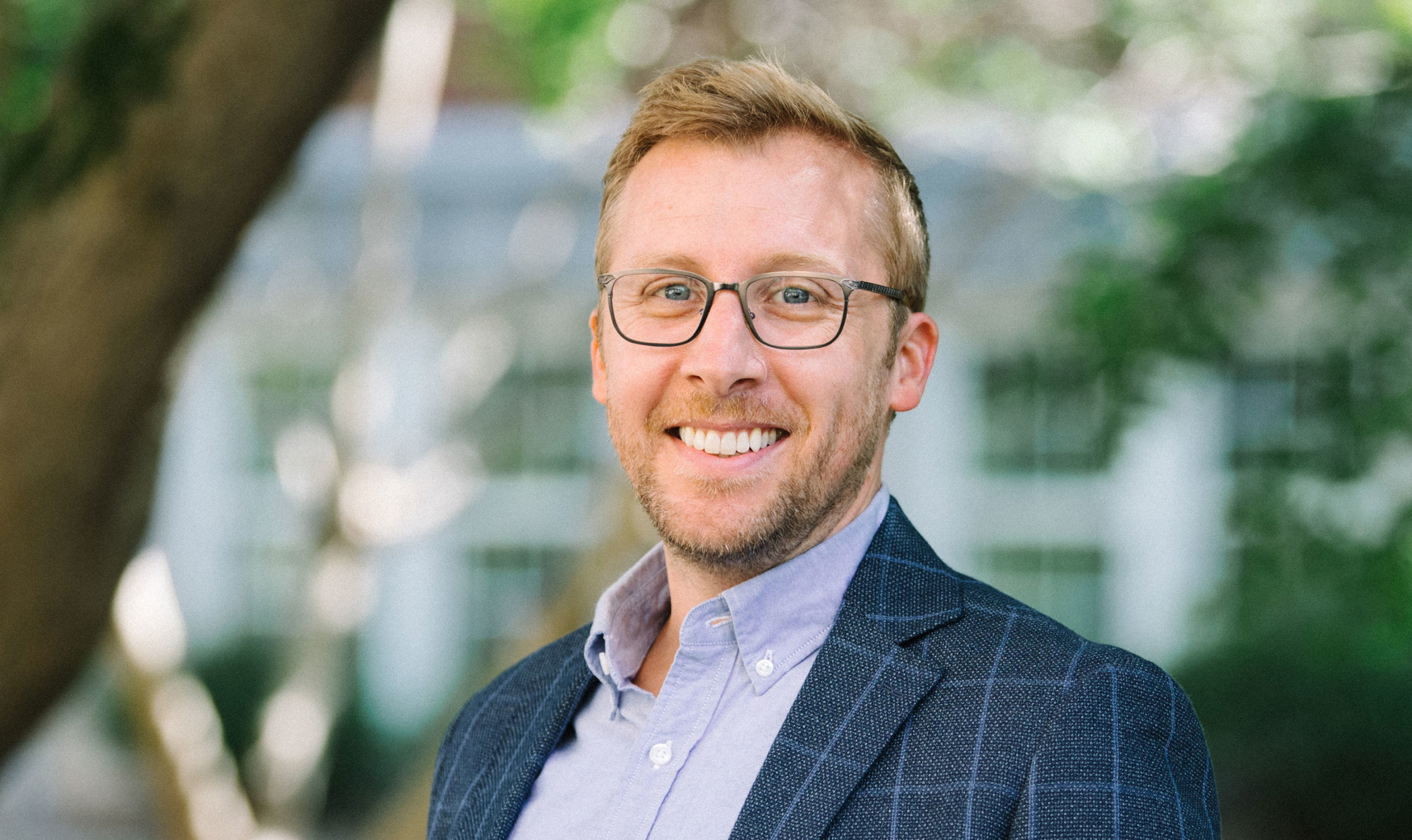
When Daniel Klasik, Ph.D., was traveling the country as an admissions officer for Vassar College in New York, he noticed the ways geography impacted students’ college choices.
When he visited high schools outside of the state, he found that most students weren’t thinking about colleges like Vassar. He said that many, understandably, were considering options closer to home, some opting for schools that offered the option to commute. The reasons for staying close to home often included affordability and the ability to more easily maintain important family and friend ties.
But where does this scenario leave students who have few post-secondary options nearby?
Questions like these are what drove Klasik, now an associate professor at the UNC School of Education, back to school to learn more about the factors that influence students’ pathways to college.
“My work in admissions really got me thinking about how geography shapes students’ post-secondary opportunities,” he said. “My research since then has been broadly about how students choose whether and where to go to college, how policies can help them make those choices, and how we can open up more college opportunities for all.”
Klasik’s latest research, “A Chill from the Desert: How Education Deserts Shape Students’ Pathways to College” published in Research in Higher Education, analyzes data from high school surveys in education deserts to draw conclusions beyond what we already know — that students who live in education deserts are less likely to attend college. Klasik goes beyond geography, exploring complex factors — including honors, AP, or IB course offerings; family and community attitudes toward post-secondary education; and broader economic opportunity in the region, among others — that can make the desert even colder or more difficult to see beyond.
By using rigorous research methods to identify the points along a student’s life where greater supports can help more students see themselves pursuing education beyond high school, Klasik hopes more students will be able to access the benefits of a college education, no matter where they happen to grow up.
“We know from research that students who get a college degree earn far more in their lifetimes than students who don’t have a college degree. And the benefits aren’t just those economic ones — people with college degrees are more likely to be healthier and participate in civic life more.”
Deeper into the desert
The term “education desert” was first introduced in 2016 by education researchers Nicholas Hillman, Ph.D., and Taylor Weichman, Ph.D. Drawing upon the idea of food deserts — areas where residents have limited access to nutritious, affordable food — Hillman and Weichman defined an education desert as a geographic area with fewer than two public community colleges and no accessible four-year colleges available close enough to commute to, which presents challenges for students who seek or are limited to educational opportunities closer to home.
Klasik said about 12% of college applicants live in education deserts, and while this relationship between where a student lives and whether they seek and obtain a degree has long been identified, the underlying factors that influence that outcome have been less researched and understood.
These deserts exist in pockets all over the country, in both rural and non-rural areas, and the factors associated with living in an education desert are similar in both, Klasik said. Education deserts typically have weaker economies, with fewer job options requiring a college degree. Many of these areas also lack advanced academic resources, like honors or AP courses, that prepare students to be competitive in the college admissions process.
“Part of the theoretical thinking about this was that not having a college in your area shapes the expectations and worldview of the people that live there. In this case, education deserts appear to have some sort of negative relationship with how people are looking to the future and thinking about opportunities for their children,” he said.
A desert not only affects where a student enrolls, but Klasik’s analysis shows it also impacts whether these students even consider enrolling in or applying to college in the first place, he said. Accessing college is about more than navigating limited geographic options, he said. Students’ expectations of attending college evolve over time. So, what is it about an education desert that keeps them from progressing toward enrollment in some form of post-secondary education?
To learn more about how education deserts impact students, Klasik analyzed data from the High School Longitudinal Study of 2009, which surveyed students who were expected to graduate high school in 2013, starting in the ninth grade and at two-year intervals. The surveys collected various data points about students, their families, and their academic progress.
Klasik used zip code data to evaluate survey data from education deserts and draw conclusions related to whether students assumed they would apply to college and if they reported submitting applications later. Specific college pipeline outcomes measured by the survey included whether students expected to earn a bachelor’s degree, whether they attained the minimal academic qualifications needed to attend college, and if they later applied or enrolled in two- or four-year colleges. At almost every interval, fewer students living in education deserts achieved these outcomes when compared to those outside education deserts.
His analysis revealed both the direct impact of education deserts on the road to college and the indirect relationship education deserts have with students’ progress along the college pathway.
“Across all of the different pieces of the pathway to college that I looked at, the really consistent factor was that that students were less likely to move closer to college through each of those different steps because living in an education desert was associated with lower community expectations and lower parental expectations of college enrollment and lower likelihood that they have friends that are also on the path to college,” he said. “Students were less likely to even aspire toward a college education, to engage in the kind of academic coursework necessary for college enrollment.”
Racial and socioeconomic disparities play a role, too, in the barriers to college education, he said. Klasik’s research has found that the students who apply to colleges from education deserts were more likely to be White and just as likely to come from families with college degrees, highlighting and exacerbating existing social inequalities in college access.
“We don’t want students to necessarily be in this position where they’re having a hard time accessing a college degree and the success that comes from that,” he said. “We want to make these choices easier for students — the big question is how.”
Starting earlier to expand access
The answer is not necessarily to build more colleges in education deserts — it could be in building more supports as students progress through their educational career, Klasik said.
Klasik hopes these findings can lead to policies and practices that actively create college awareness and opportunity earlier along the trajectory for students.
Research has repeatedly pointed to the importance of having early aspirations to attend college. But, absent of parent support, high school counselors and teachers are an important part of creating stronger college-going cultures, he said.
So, even if a school can’t offer more AP courses, they can help identify existing opportunities to influence students’ perceptions of college along the way.
“We need to find ways to reach students in these areas early on, and not just as they should be applying to college,” he said. “It takes a lot of planning, in terms of financial planning and academic planning, making sure that students are taking the right courses and earning the grades they need so that we don’t close any doors on them on that path to college.”
Colleges from outside the area can do a lot through recruitment, using digital outreach and communications to reach students virtually and at different points in their high school careers. Having knowledge of any nearby community college dual-enrollment opportunities at the start of high school would help students aspire to them if their high schools don’t offer advanced courses.
As parents are enormously influential in the college process, next steps for research could be in investigating their perceptions of college, he said. Parents typically have outsized expectations for their children, but there hasn’t been enough research about their experiences in education deserts.
“It’s a hard thing to change someone’s worldview about college. Digging into the parent side of things and trying to understand what shapes their expectations for their children could help us turn a corner there,” he said.
References
Klasik, D. (2026). A chill from the desert: How education deserts shape students’ pathways to college. Research in Higher Education, 67, 29. https://doi.org/10.1007/s11162-026-09887-5
Hillman, N., & Weichman, T. (2016). Education deserts: The continued significance of place in the twenty-first century. American Council on Education, Center for Policy Research and Strategy. https://www.luminafoundation.org/wp-content/uploads/2017/08/education-deserts-the-continued-significance-of-place-in-the-twenty-first-century.pdf