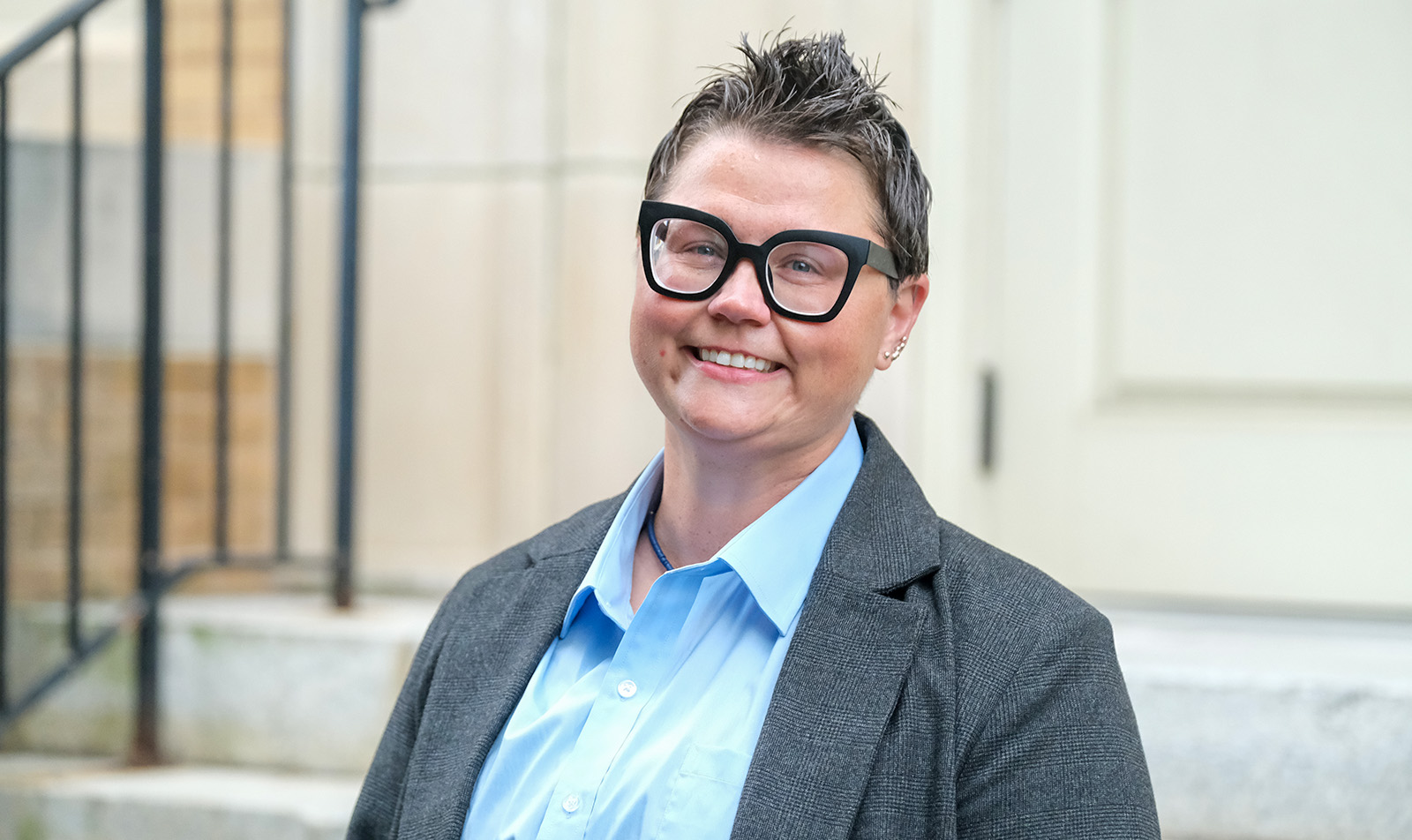
Stephanie Anne Shelton, Ph.D., the Donald G. Tarbet Faculty Scholar in Education at the UNC School of Education, was recognized at the 2026 American Educational Research Association Annual Meeting with Division D’s Significant Contributions to Research Methodology Award.
The annual award recognizes published research, conducted by an individual or team of researchers, that represents a significant advancement in the theory and practice of educational measurement and/or educational research methodology.
Shelton and her colleagues — Jennifer R. Wolgemuth, Ph.D., of the University of South Florida and Kelly W. Guyotte, Ph.D., of The University of Alabama — received the award for their book, “Expanding Approaches to Thematic Analysis: Creative Engagements with Qualitative Data.” The book pushes the field of qualitative inquiry to understand thematic analysis — a common approach to analyzing data — as more expansive than inductive or deductive coding.
The book includes 18 chapters that explore a range of ways researchers might consider qualitative data, including annotations, poetry, photography, reading, writing, listening, comics, memos, and more.
“Themes are not just categories and patterns to ‘extract’ from data, nor are they concepts that spontaneously ‘emerge’ during analysis,” Shelton said. “Researchers create themes through their engagements with data. One of the main reasons for this work on expanding thematic analysis was to provide resources and examples for researchers to consider how analytic processes might look and work differently as ongoing, reflexive, theoretical efforts, while also emphasizing that alternative analytic approaches support robust, responsible, and valuable research.”
Shelton specializes in interview- and focus group-based research. Feminist and queer theories regularly inform her scholarship, as she examines methodological concepts such as reflexivity, informed consent, bias, and subjectivity. She also explores pedagogical practices in qualitative inquiry, including the ways students learn to design and implement qualitative studies that center equity and social justice as core methodological tenets.
“One of the reasons that I love being a methodologist is that I don’t just do research, but I work to interrogate how research works, how it gets done, why it works that way, and how those practices might be expanded to work in new and different ways,” Shelton said. “For decades, qualitative research has been heavily associated with coding and categorization, and while these approaches are still useful, they are not all that is possible. This award recognizes a deliberate effort to not only expand how scholars might analyze qualitative data but to push them to consider why they make those decisions.”
Shelton is also the School’s co-coordinator of the Graduate Certificate in Qualitative Studies and was recently elected chair of AERA’s Qualitative Research Special Interest Group for the 2026-2029 term.
To learn more about the award, visit aera.net.