Troy Sadler, Ph.D., the Thomas James Distinguished Professor of Experiential Education at the UNC School of Education and a leading science education researcher, will join a National Science Foundation-funded project led by Janet Nye, Ph.D., College of Arts and Sciences professor and interim director of the UNC Institute for Marine Sciences, that will study how changing water temperatures off the coast of North Carolina affect marine fish populations, improving predictive models of marine biodiversity and providing new direction for fisheries management.
The $750,000 grant project — “From Barrier to Bridge: Permeability of biogeographic barriers at ocean convergence zones” — also includes the development of a new summer marine science course, which will create new opportunities for biology students from universities across North Carolina and beyond that don’t offer marine science or oceanography coursework or field experience opportunities.
Nye serves as principal investigator, Sadler as co-principal investigator.
“North Carolina is at this amazingly interesting place where warm and cold waters converge and create this really profound boundary,” Nye said. “Fish are sensitive to differences of temperature. Some are going to be able to cross that temperature barrier and be just fine, but other species are not.”
Nye noted that as water temperatures are rising, fish are moving — but not consistently across species or by location. Geographically, fish species north of Cape Hatteras are shifting more, but species along the South Atlantic Bight are shifting less. This study will begin to examine temperature as a geographic boundary in this shifting and to understand patterns across a range of fish species, including king and Spanish mackerel, butterfish, croaker, grouper, and snapper.
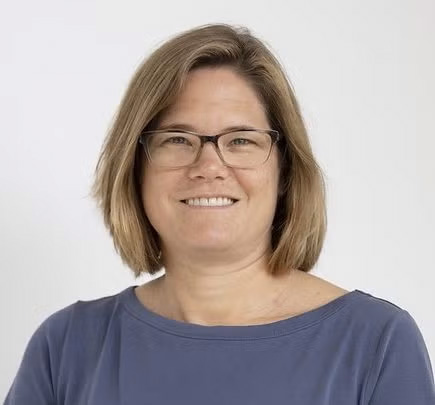
In addition to creating improved statistical modeling of marine fish distributions, Nye and her team’s work will also inform local and regional marine fisheries management, which plays a leading role in the economic impact of the region.
The educational component of the project will build upon decades of existing programming undertaken by the UNC Institute of Marine Sciences to present marine and fisheries science to a broader array of students at colleges and universities that may only have a more general biology curriculum. The grant will help to develop an experiential field course for these students — an experience Nye said she hopes could expose them to new career trajectories. Sadler will evaluate the course and its impact.
This project emerged, in part, from Sadler’s fall 2025 semester at the UNC Institute of Marine Sciences in Morehead City, North Carolina, where he studied the science coursework and experiences of undergraduates from UNC-Chapel Hill, NC State University, and Duke University and established partnerships that continue to open new avenues for research and education.
“The work of IMS is, across the board, focused on North Carolina processes and helps students and citizens to understand what’s happening in the coastal environment of the state,” Sadler said. “It’s a model for understanding marine science and oceanography globally and an impressive approach for preparing future scientists.”