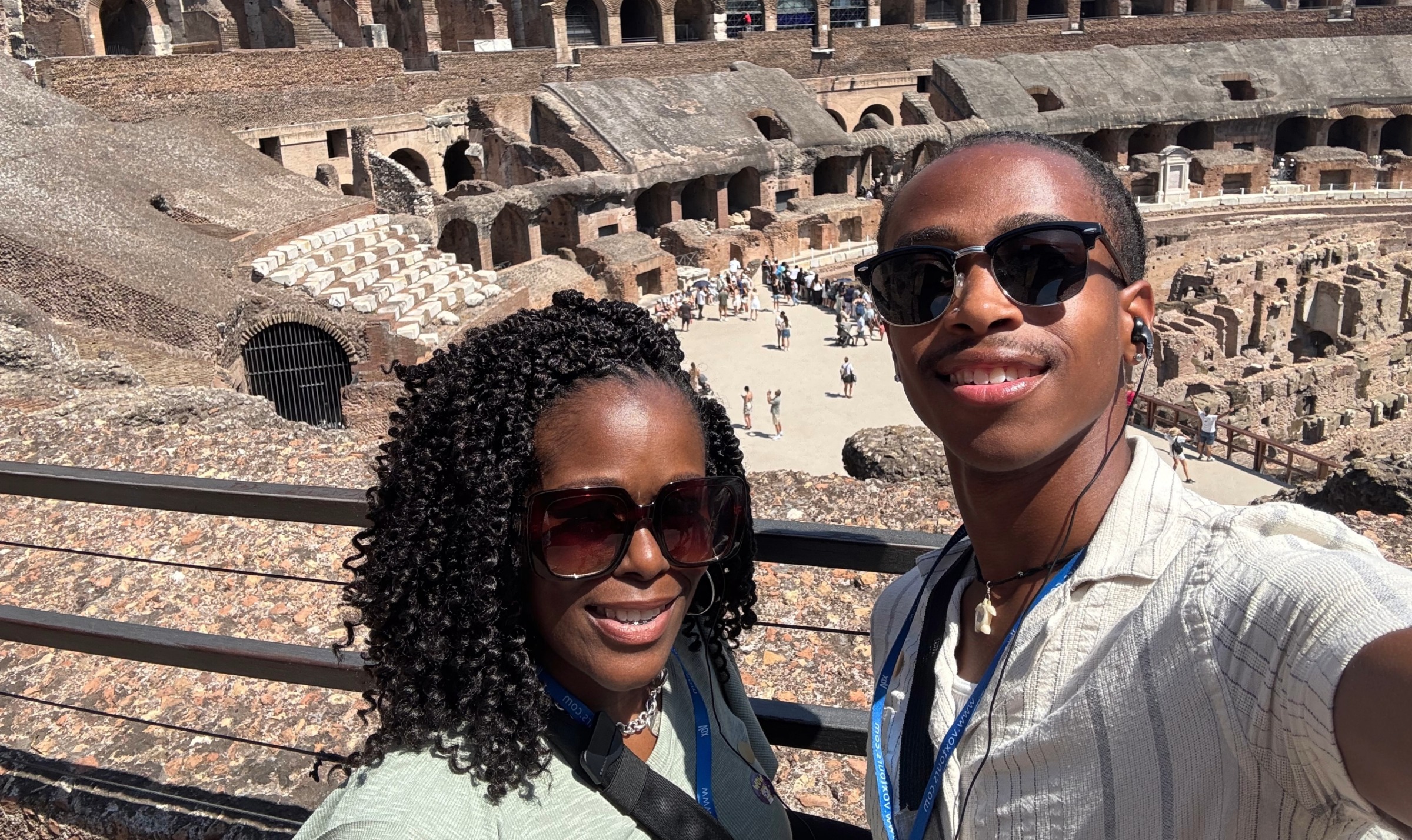
Growing up in Trenton, North Carolina, Ja’Khari Bryant knew what it meant to be part of a small community.
With a population of about 300, his hometown was a place where nearly everyone knew one another. It was also a place where opportunities could be difficult to find. His school offered few clubs or arts programs, and pursuing his interests sometimes meant looking beyond Trenton. When Hurricane Florence swept through eastern North Carolina in 2018, even those opportunities became inaccessible.
When Bryant arrived at the University of North Carolina at Chapel Hill in 2023, he found possibilities on a scale unlike anything he had known.
“Carolina was always the place I wanted to be,” he said. “But I never could’ve predicted what I would find here.”
Now a senior, the Morehead-Cain Scholar is double majoring in Human Development and Family Science
and Exercise and Sport Science with a minor in neuroscience. He has studied and worked in health care settings around the world, sung with Carolina’s oldest a cappella group, danced with largest student-run dance company on campus, served in undergraduate student government, and become senior class president.
Across those experiences, Bryant has come to see opportunity and community as inseparable. People need the freedom to discover what matters to them, he believes, but they also need communities willing to support them as they pursue it.
Expanding what it means to care for others
As a first-year student, Bryant planned to pursue nursing. A lifelong interest in medicine had become personal as he watched his mother battle cancer, and he was drawn to the immediacy of patient care, particularly working with children.
But conversations with HDFS program director Helyne Frederick, Ph.D., pushed Bryant to think more broadly about what it could mean to care for others. He enrolled in the HDFS program and has built an interdisciplinary course of study that examines health not only through the body and brain, but through relationships, families, cultures, and systems that shape a person’s life.
“My [HDFS] coursework has taught me to see community in every system and interaction, even in moments when I might not have recognized it before,” he said.
Outside the classroom, Bryant began seeing those connections firsthand.
After his first year, he spent eight weeks in Baltimore through the Morehead-Cain Summer Enrichment Program. Working with the city’s Office of Equity and Civil Rights, his team examined barriers women faced in accessing preventive cardiovascular care. Through interviews, focus groups, and community-based health efforts, Bryant saw how access, resources, and larger systems can determine whether someone receives care at all.
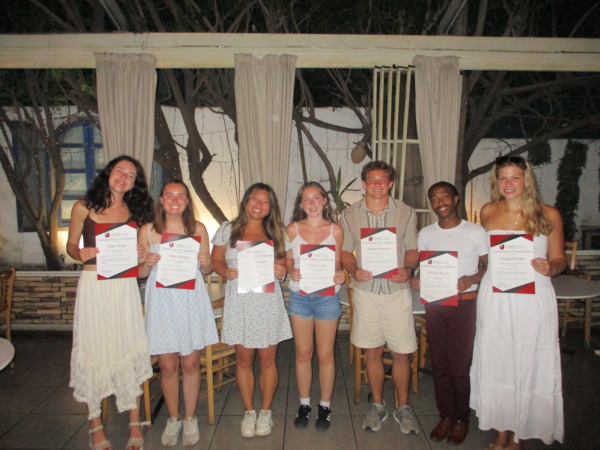
Later experiences took those lessons across borders. In the Dominican Republic, Bryant lived with a host family while learning Spanish and gaining experience in physical therapy, elder care, and emergency response. At the University of Nicosia in Cyprus, he completed coursework in biomechanics, care management, and child and family health.
Across settings, his understanding of care continued to widen. Helping people thrive, he saw, required more than responding to an immediate need. It meant understanding the circumstances around them and creating conditions for them to pursue healthy, meaningful lives.
Turning opportunity outward
That broader understanding of care traveled with Bryant to Brazil last summer, where he visited Carolina alumna Zoë Ackerman, co-founder and CEO of Mycelios Games, and learned about her solo card game designed for people carrying high cognitive and emotional loads.
Conversations that began around health and well-being soon expanded to education. Bryant returned to Chapel Hill thinking not simply about what he had learned, but how he could share it. He has since begun exploring ways to bring the game into the School of Education as a resource for faculty and students.
“HDFS asks us to understand people not only as individuals, but in relation to the systems around them,” he said. “That perspective helps me see how supporting one person can ultimately strengthen something much larger.”
Bryant knows what that support can make possible. Despite arriving from a town of 300 to a campus of more than 30,000 students, he has found a way to make Carolina feel smaller. He jokes that walking across campus can take longer than expected because he seems to stop every few minutes to talk with someone he knows.

Those relationships have grown alongside opportunities to explore parts of himself that had few outlets growing up. Singing with the UNC Clef Hangers and dancing with Blank Canvas Dance Company have become important parts of his own well-being. They also helped shape his decision to run for senior class president.
After watching friends serve as class president and vice president during his sophomore year, Bryant saw that their impact extended beyond the events they planned. They were creating opportunities for students to connect, participate, and find their place at Carolina. By his junior year, he began imagining how he might do the same.
“As senior class president, I want students to know it’s never too late to find their people and find their passions,” Bryant said. “If we can create a Carolina where students feel supported enough to explore who they are and what they care about, they’ll leave Carolina feeling like they’ve found a home here.”
This spring, Bryant will intern with Emerge Pediatrics in Durham as his culminating experience in the HDFS program, giving him another opportunity to explore direct patient care before pursuing graduate study in athletic training. He will also prepare his graduation speech, something the younger Bryant, dreaming of one day attending Carolina, could hardly have imagined.
“My hope will always lie in seeing people follow their passions,” Bryant said. “We are creating a world where people are being themselves, and that is making a better, healthier society for everyone.”
The Human Development and Family Science (HDFS) program at the UNC School of Education is celebrating its 10th anniversary during the 2026-27 academic year. The following story is one of a series focused on the program’s impact on its students and alumni.