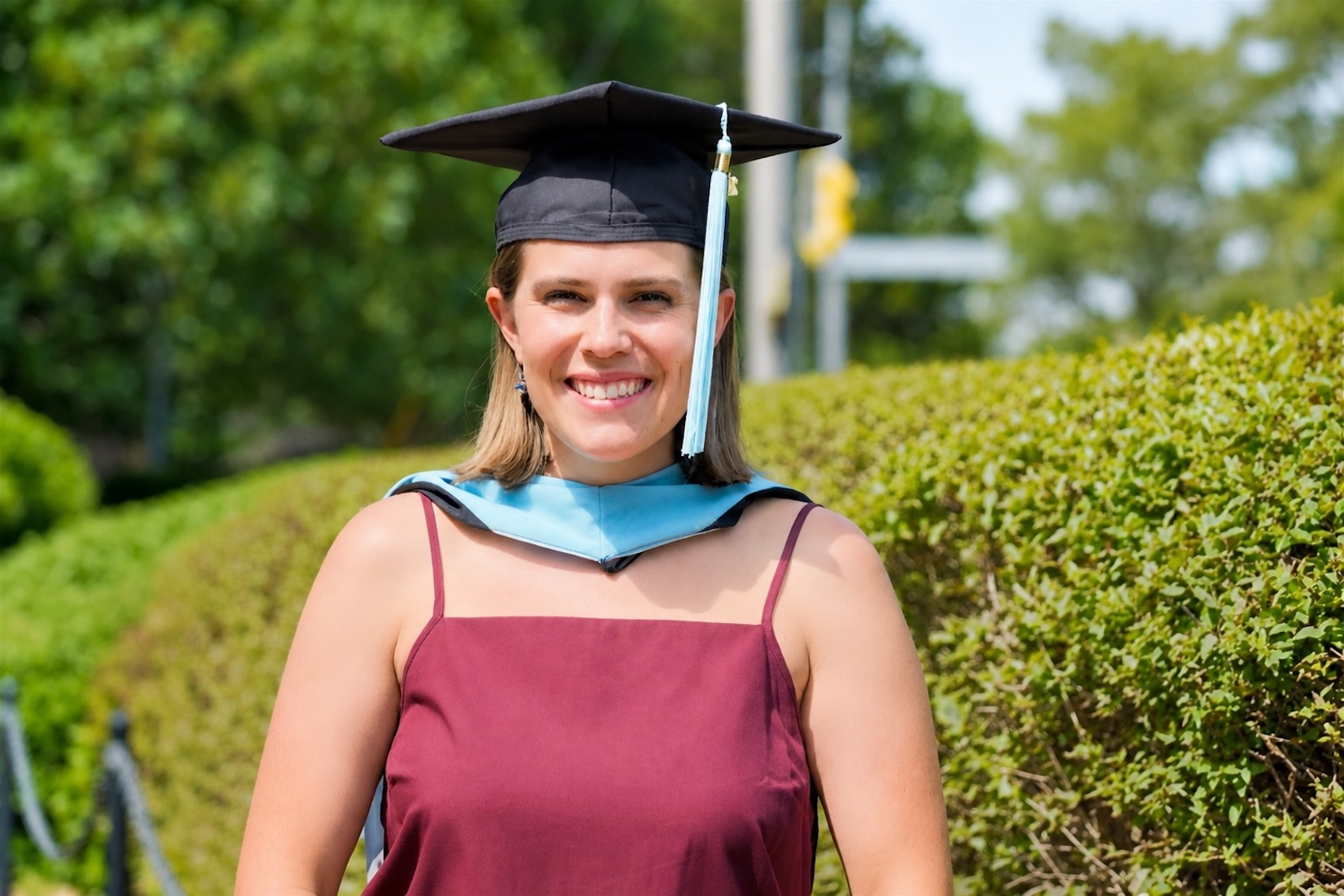
Maddie LaMear, the UNC School of Education’s 2026 Student Teacher of the Year, says she wants her students to leave her classroom saying, “I can do hard things” and then carry that mindset with them for years to come.
After earning an undergraduate degree in archaeology and a year spent volunteering in Cairo, Egypt, LaMear moved back to Chicago for a few years and worked in retail while discerning her next steps within her career.
LaMear said her path to teaching was also shaped by educators she had growing up in Tucson, Ariz., including Mrs. Schannep, her kindergarten teacher; Mrs. Walker, her fourth-grade teacher; Ms. Ewing, her middle and high school Latin teacher; and Mrs. Kirk, her high school English teacher. Their impact stayed with her, showing her how teachers can shape students’ curiosity.
There, she lived with a family whose 2 teenage children both have learning differences. Through these relationships and her work in special education after she moved to Durham, she became increasingly curious about learning differences, the broader field of Special Education, and how schools can better meet the needs of all learners, regardless of their unique learning style.
Later, as an instructional assistant at Hill Learning Center, an educational nonprofit in Durham that supports students with learning differences through a specialized half-day academic program, comprehensive tutoring, and teacher training, LaMear learned more about research-based practices, learning differences, and how systems can better serve students who learn differently. The experience clarified what kind of educator she hoped to become.
“From the first day in the classroom, I realized that there was no other job that I would love as much as teaching,” LaMear said. “Guiding students’ learning and watching them grow is the best job in the world.”
That experience led LaMear to the School’s 14-month Master of Arts in Teaching program, which prepares aspiring educators to earn initial North Carolina teaching licensure while connecting academic study with the realities and needs of today’s classrooms.
Grounded in research-based best practices, the MAT program combines structured coursework, a close-knit cohort experience, and a two-semester student-teaching internship, helping LaMear and fellow MAT students build teaching skills — while learning alongside experienced educators and developing the confidence to lead their own classrooms.
For LaMear, a spring 2026 graduate who will earn licensure in both Elementary Education and Special Education – General Curriculum, the School stood out for both the quality of its faculty and the value of the program. She credited Nicole Damico, Ph.D., MAT program director, with helping her understand what made the program distinct.
“I’ve learned so much during both my coursework and my student teaching experience,” LaMear said. “I now realize that I will always be both a student and a teacher. I am forever learning, growing, and changing. That’s one of the complex joys of being human as well as the absolute best part of teaching!”
Coursework that came alive in the classroom
For LaMear, the MAT program connected her love of learning to the practical skills and mindsets required to lead a classroom. Her undergraduate studies in archaeology and geology had already shaped her curiosity and appreciation for interdisciplinary learning. At Carolina, she began translating that curiosity into a student-centered teaching practice.
LaMear said MAT faculty did not simply teach instructional practices, but demonstrated them. In methods courses, classroom routines, discussions, and assignments, she saw what student-centered teaching could look like before applying those approaches herself.
“It’s a program where everything they’re doing is modeling best practices as they’re teaching you,” LaMear said. “You’re just immersed.”
Some of La Mear’s most meaningful learning came through hands-on coursework and experiences centered on special education, access, and individualized support. She said courses such as EDUC 615: Schools and Community Collaboration with Cheryl Mason Bolick, Ph.D., and EDUC 307 with Dionne Cross Francis, Ph.D., helped her see how faculty modeled the same student-centered practices they were preparing MAT students to use in their own classrooms.
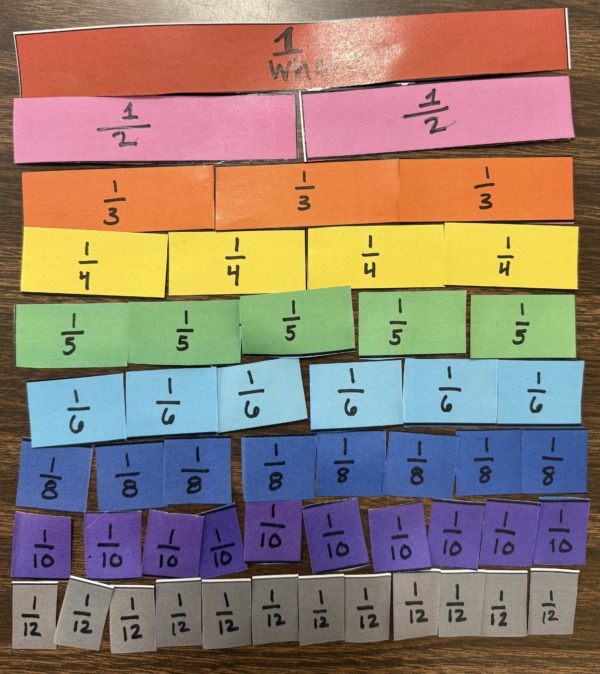
In EDUC 615, La Mear recalled how Bolick invited students to sit together on the floor, share parts of their own stories, and bring their whole selves into the classroom — an approach that later shaped how La Mear built relationships with her fourth graders. In EDUC 307, taught by Cross Francis and facilitated by doctoral students Anna G. “Gus” Gustaveson and Katie Habib, La Mear experienced math instruction through hands-on, inquiry-based activities, from cutting out fraction bars to using Skittles and Unifix cubes to model and solve problems.
“It was classes like these that inspired and informed so much of what I did during student teaching as well as the countless ideas I have for my classroom,” LaMear said.
“All students have the right to learn,” LaMear said. “I believe it’s my job as an educator to provide access to and facilitate that learning.”
That belief followed her into her student-teaching placement at Pittsboro Elementary School, where she taught fourth grade and began turning her coursework into practice.
In math lessons, she incorporated more student talk and inquiry-based learning, drawing from her MAT coursework. She had students cut out their own paper fraction bars — an activity that helped them build a deeper — and concrete — understanding of fractions.
“I was just blown away by what students were capable of when you give them more opportunity to talk and to be more active contributors to the classroom,” LaMear said.
Her coursework on schools and community collaboration also shaped her approach to building relationships with students. She learned the importance of understanding students beyond their academic performance, including their families, interests, communities, and lives outside school.
“Students, like all of us, are relational people,” LaMear said. “My coursework really opened my eyes to how important it is to make space for kids to bring their whole selves into the classroom. You get immediate feedback on how much that works and how important that is to kids.”
Guided by experienced educators
LaMear said her growth as a teacher was shaped by educators who supported her throughout student teaching, including her mentor teacher at Pittsboro Elementary, Shane Henderson, and her university supervisor, Sarah Cornette, a doctoral student in the School’s Culture, Curriculum, and Teacher Education Ph.D. concentration and a former classroom teacher.
“Both of them are incredible educators in their own right, and both brought a unique set of experience and skills into their mentorship,” LaMear said.
Henderson, a 2025-26 Milken Educator Award winner (which are known as “the Oscars of Teaching”), helped LaMear build classroom systems — organizing teaching materials, tracking student data, and creating structures to support her daily work as a teacher. Those details, she said, may seem small, but they are essential to teaching.
“Everything she does reflects a genuine focus on what is best for students academically, socially, and emotionally,” Henderson said. “She is exactly the kind of emerging educator you hope to see in a student teaching role and gives real hope to the teaching profession that another dedicated educator is entering the workforce who will help change the lives of students.”
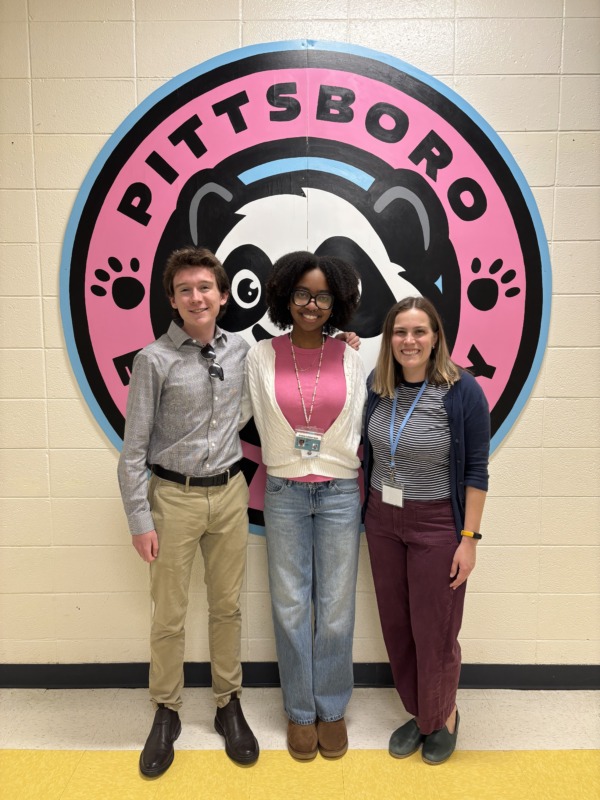
Cornette helped LaMear see the classroom with sharper attention to access and student experience, offering small, thoughtful suggestions — such as adjusting screen contrast so students in the back of the room could better see the material. Those practical changes helped LaMear understand how even minor adjustments could make a lesson more effective for more students.
“Maddie exemplifies student teaching excellence through the rare combination of skill, steadiness, humility, and thoughtful professionalism she brings to the classroom every day,” Cornette said. “She is the kind of student teacher who already feels deeply grounded in the work: attentive to students, reflective about her decisions, and genuinely committed to learning from every part of the experience.”
“It was just so helpful to get feedback from them and then have an opportunity to put that feedback into practice immediately,” LaMear said.
For LaMear, that kind of feedback did more than prepare her to become a teacher — it helped her understand the kind of teacher she wants to be: one who creates classrooms where students are known, challenged, supported, and confident in their ability to learn.
“The MAT program is a unique combination of the hard and soft skills it takes to be a teacher,” LaMear said. “The whole program recognizes the reality that teaching is so much more than lesson plans. Lesson plans are important, but they taught us to pay attention to students and really stay student-focused.”