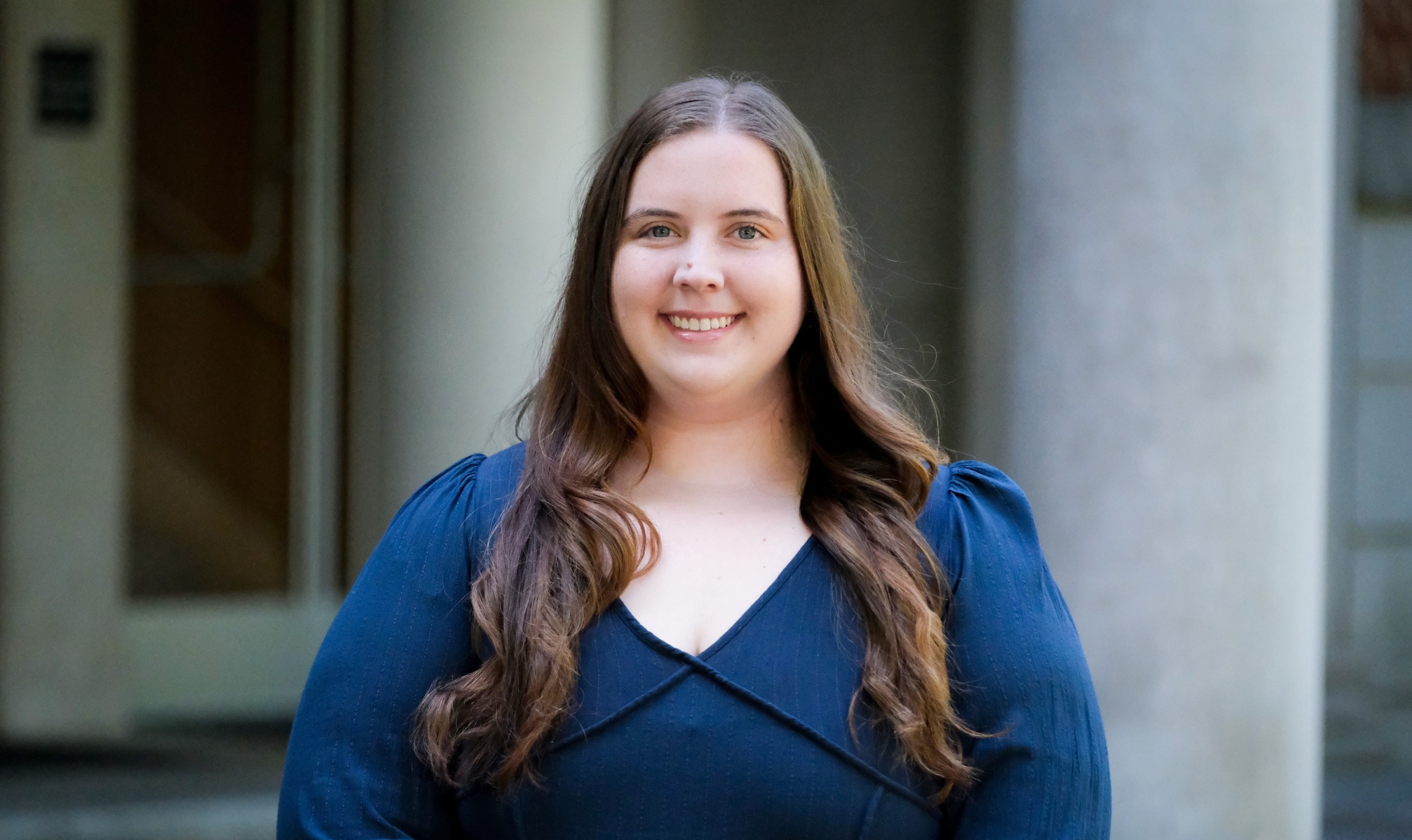
Before arriving in Chapel Hill, Avery Humphries viewed Carolina as a place of opportunity. As a high schooler in Cliffside — a small community in North Carolina’s Rutherford County — she dreamed about finding her place on a campus so large but also wondered how she could make college financially feasible.
Her high school counselors helped make that dream feel possible.
“I wasn’t sure about being farther from home and if it would be achievable,” Humphries said. “But I worked with my high school counselors, and they poured into me and helped me find scholarships.”
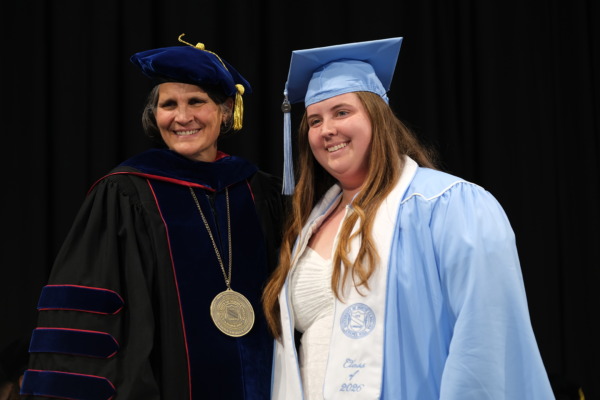
After graduating from the UNC School of Education’s Human Development and Family Science program in 2026, Humphries enrolled in the School Counseling program and hopes to provide that same encouragement to future students.
Humphries said her interest in Carolina was influenced, in part, by her sister, who graduated from the School’s Human and Organizational Leadership Development program in 2023. Still, she entered college unsure of her academic path.
That changed after taking EDUC 181: “Introduction to Human Development and Family Science.”
“It made me passionate about learning about families,” Humphries said. “I was drawn to helping people, and I wanted to have a career where I could help families and help others. I wasn’t exactly sure how yet, but I could tell that HDFS and the School of Education had those same goals.”
Through HDFS, Humphries discovered connections among psychology, education, family systems, and community support. During her time as an undergraduate, Humphries worked as a substitute teacher in both Rutherford County Schools and Chapel Hill-Carrboro City Schools, experiences she said differed by community but shared the same purpose: providing support for students.
“There was one student in my hometown who I talked to in class, and at the end of the day. She said, ‘Thank you for letting me talk to you. I just needed somebody today,’” Humphries recalled. “That spoke volumes to me because you do not always know when you might be the only person pouring into a student that day.”
For Humphries, the School Counseling program — a 14-month, cohort-based program that connects classroom theory with real-world practice to prepare future school counselors — emerged as a seamless fit. Shaped by her experiences and the impact of her high school counselors, the program could help her achieve her goal of returning to serve students in communities like the one where she grew up.
“The School of Education values every student and cares for every student,” Humphries said. “I’ve had moments in class where someone mentioned rural North Carolina and the importance of going back, and I felt seen. I remember thinking, ‘That’s me. I’m one of the rural North Carolina students.’”
Where support helps students see what’s possible
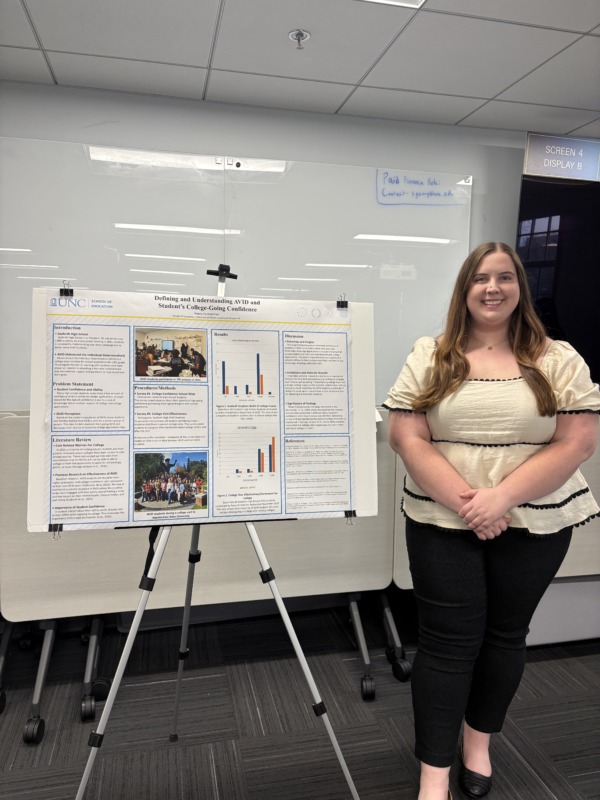
Humphries strengthened her interest in student support during her senior-year HDFS internship at Seaforth High School in Chatham County, where she will return for her School Counseling internship.
During the internship, she worked with both the school’s Student Services Team and Advancement Via Individual Determination, known as AVID, a college readiness program. She helped students with college applications, scholarship information, FAFSA resources, and postsecondary planning. She also worked directly with students on college exploration, organization, and future planning.
One of her largest projects involved organizing college tours to the North Carolina mountains and the Piedmont Triad. The visits exposed students to different types of institutions and helped many see college as an attainable option. The experience showed Humphries how access and exposure can influence students’ goals.
“It was a great time to reflect, but to also see, ‘What we’re doing matters,’” Humphries said.
Outside her internship, Humphries served as a college mentor through College Contact, helping students and families navigate the transition to higher education. Across her internship, mentoring, and substitute teaching experiences, she found that students consistently wanted adults who would listen, care, and help them feel supported.
Those moments reinforced the kind of school counselor she hopes to become.
“The purpose of learning in schools, and what schools are and what they mean, is having somebody intentionally in a student’s corner,” Humphries said. “Someone who can say, ‘I’m going to help you get into the classes you want because I know you like art,’ or, ‘I know you want to go to this school, so let’s find scholarships to help you get there.’ Having that intentional, direct support is something students can benefit from.”
Since starting the School Counseling program this summer, Humphries said she looks forward to gaining additional experience supporting students’ academic, social, and emotional development —with the intention of working at the high school level and advocating for greater access and opportunity in rural communities.
“Students spend a lot of time in school at that age, and there are so many things happening — friends, drama, mental health, how they feel about themselves, how they treat themselves, and how they treat others,” Humphries said. “I want every student to know that they are important and that they should have the opportunity to pursue what they want, despite where they come from or what they feel like they can achieve.”