#14 in the U.S. for Special Education
#15 in the U.S. for Elementary Education
– U.S. News & World Report, 2026
The B.A.Ed. in Elementary Education program prepares teachers for today and tomorrow, earning dual North Carolina licensure in Elementary Education (K–6) and either Special Education – General Curriculum (K–12) or English as a Second Language (K–12)* through research-grounded coursework and hands-on classroom experience. Graduates understand their students deeply, possess subject matter expertise and effective teaching strategies, and make an immediate, measurable impact on students, families, and communities.
*Note: English as a Second Language (K–12) licensure will not be available for fall 2026 applicants.
Prepared for Today and Tomorrow
The B.A.Ed. in Elementary Education program prepares teachers for today and tomorrow. Graduates enter the field equipped to implement research-grounded instructional methods, deeply understand their students’ needs, and make an immediate, measurable impact on students, families, and communities.
The program is built on the School of Education’s faculty expertise, research strengths, and proven outcomes in educator preparation. It draws on what we know works — research-grounded methods, fieldwork experience, and individualized feedback — to prepare teachers to not only lead their own classrooms, but to contribute meaningfully to the profession and education across North Carolina.
Meeting the Needs of Today’s Schools
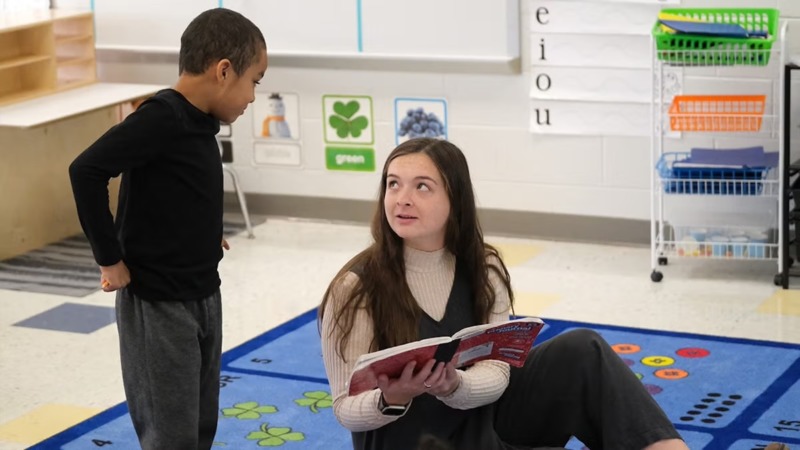
The program also reflects the needs of today’s schools, where elementary teachers support the needs of all students, including exceptional and multilingual learners. Graduates will earn dual licensure in Elementary Education (K–6) and either Special Education – General Curriculum (K–12) or English as a Second Language (K–12). With more than 330 languages spoken across North Carolina homes and nearly 15% of all students receiving special education services, this requirement ensures that graduates effectively respond to student needs and foster supportive learning environments for every student.
Students in the program receive expert instruction in how children learn across subjects — from literacy and mathematics to science and social studies — and consider how families, communities, and cultural context shape the learning experience. They also learn to use data as a tool for reflection, strengthening their ability to make informed instructional decisions that support young learners’ academic success.
The curriculum integrates social–emotional learning throughout, ensuring future teachers understand and support their students as whole individuals in an evolving digital age. At the same time, they develop their own confidence, resilience, and sense of community, learning to navigate challenges thoughtfully and respond effectively to their students’ needs. These experiences lay the groundwork for meaningful, lasting careers in education.
Field Experience and Student Teaching
Through continuous field experiences, students put their content knowledge and methods coursework into action, developing the skills needed for effective teaching. In both semesters of their junior year, students spend time each week in schools and community settings, applying what they learn, receiving feedback, and refining their practice. The program culminates in a year-long student teaching internship, where they ultimately assume the full responsibilities of a classroom teacher, including leading instruction, implementing assessments, and creating a classroom community, with the support of their mentor teachers and School faculty.
Measurable Classroom Impact
When students succeed, it reflects the quality of the teachers supporting them. Beginning teachers from the School of Education’s Master of Arts in Teaching program — those with three or fewer years of experience — are proven to help their students achieve or surpass growth expectations at rates above the statewide average. The B.A.Ed. in Elementary Education program draws on that proven success to prepare elementary teachers that set the standard for the future of education — because today’s students deserve teachers prepared to lead tomorrow’s classrooms.
Learn More About the Program
Key Benefits
These key benefits highlight what sets the B.A.Ed. in Elementary Education apart and how it prepares graduates to make an immediate, lasting impact.
Graduates leave ready to teach all learners — earning licensure in Elementary Education and either Special Education or English as a Second Language. They step into today’s classrooms prepared to meet diverse student needs, foster supportive learning environments, and make a lasting impact on their schools and communities.
Students learn to teach in content-rich, research-grounded methods courses led by faculty members leading their fields. Coursework in the science of reading, project-centered science instruction, and mathematical literacy equips them with both the content knowledge and teaching strategies to support young learners’ academic success.
Data offers today’s educators powerful insights to better support every student’s progress. Graduates leave the program ready to harness technology and the data it produces, interpret that information with confidence, and make teaching decisions that will create a measurable impact on student outcomes.
Social-emotional learning is embedded in every part of the curriculum, preparing future teachers to support their students as whole people, not data points. As a result, graduates enter schools ready to foster belonging and build classroom communities that lay the foundation for lifelong success.
Simultaneously, the program places a strong focus on supporting teacher well-being. Leadership and faculty build beginning teachers’ confidence and resilience, demonstrate how to foster a sense of community, and prepare them to remain steady and responsive to their students’ needs during challenging times.
The program adopts the most effective practices from in-service teacher development, including cycles of reviewing teaching performance and receiving focused, individualized feedback. Students are developed thoughtfully — not left to sink or swim but empowered with guidance and structure to refine their practice over time.
The program provides future teachers the opportunity to shape a teaching philosophy that is truly their own while exploring elective coursework spanning human development, family health, technology, psychology, data science, and education’s role in our society.