The Human Development and Family Science (HDFS) program at the UNC School of Education is celebrating its 10th anniversary during the 2026-27 academic year. The following story is one of a series focused on the program’s impact on its students and alumni.
When Julia Fowlkes (’26 B.A.Ed.) transferred to Carolina, she was searching for a clearer sense of direction. At the time, she was majoring in psychology, drawn to the field but disconnected from the career path it seemed to offer.
Everything changed during a conversation with an academic advisor, who suggested she explore the Human Development and Family Science (HDFS) program at the UNC School of Education. As she read through the program’s description and course catalog, Fowlkes felt an immediate sense of clarity.
“What made me passionate about psychology, that unscratched itch that I couldn’t figure out how to describe, was right there in front of me in full technicolor,” she said. “I wanted to work in human services. Not in a therapist’s office, but with my boots on the ground working with individuals and creating systems-level impact.”
In the HDFS program, faculty mentors helped shape her interests, particularly clinical associate professor Dana Riger, Ph.D., whose EDUC 375: “Identity and Sexuality” course helped Fowlkes discover a passion for sexual health that would ultimately define the beginning steps of her career.
“Dr. Riger saw my passion for the topic,” she said. “She was the kind of teacher I wanted to be. The kind of professional I wanted to be.”
As part of HDFS’s internship experience, Fowlkes spent a semester with Sexual Health for Youth in Care (SYNC), a Children’s Home Society of North Carolina program that provides sexual health education and support for youth in out-of-home care and the professionals who serve them.
While much of her work involved creating outreach and educational materials, the experience that proved most transformative happened in classrooms.
Fowlkes regularly assisted SYNC staff members as they taught sexual health lessons to adolescents in a residential juvenile justice setting. As she listened to students’ questions, she noticed a recurring theme. Alongside questions about consent, healthy relationships, and sexual health, many young people were asking how to apply those concepts in their daily lives.
“Questions kept coming up like, ‘How do I ask for consent without it being awkward?’ or ‘How do I bring up something that’s bothering me without hurting someone’s feelings?'” she said. There simply wasn’t enough time during class sessions to address every question in depth.
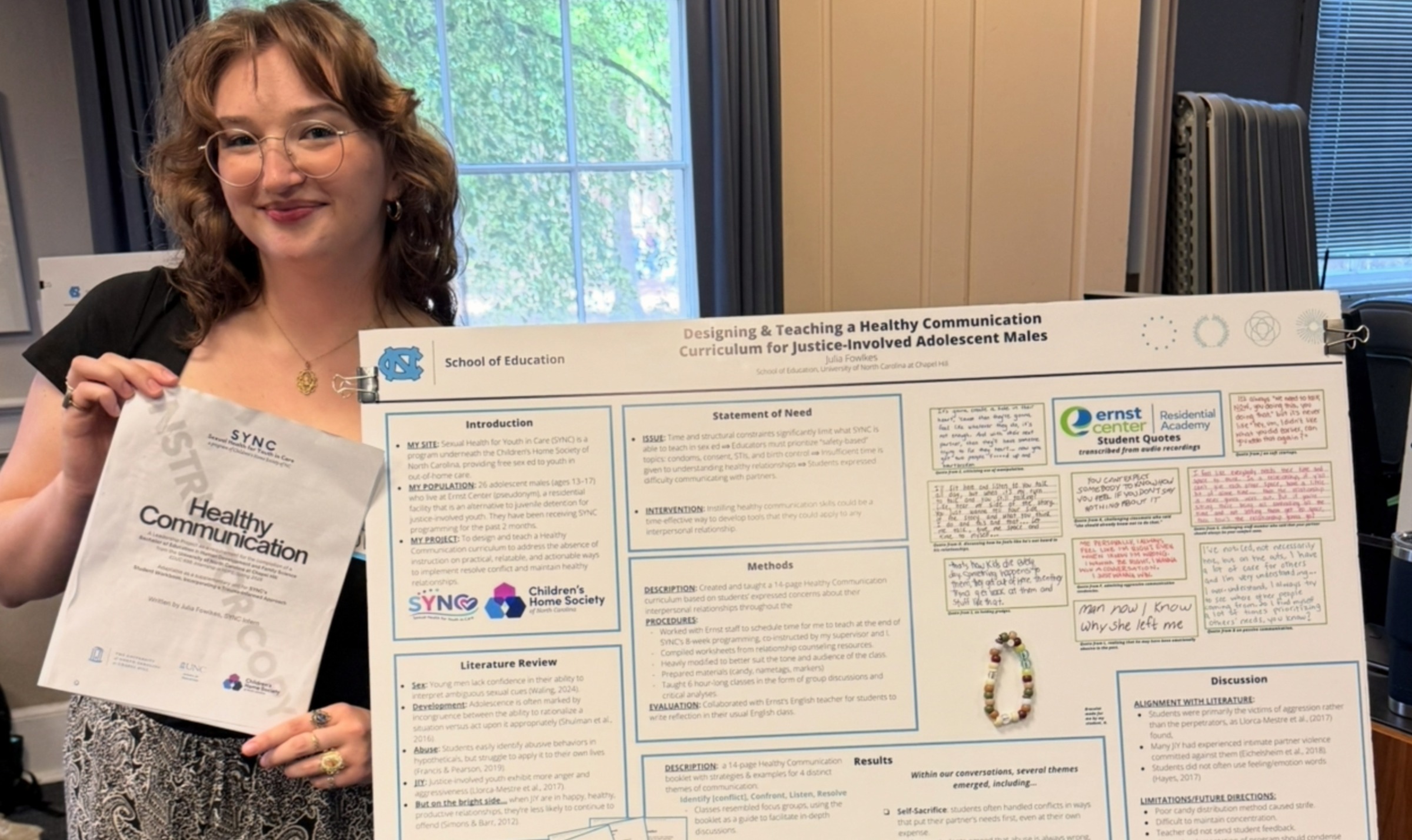
To meet that need, Fowlkes developed “Healthy Communication,” a discussion-based curriculum and companion workbook designed to help young people navigate interpersonal conflict, communicate their needs, and build healthy relationships. Just as importantly, she wanted the curriculum to be both student-driven and evidence-based, drawing on the research literacy and critical thinking skills she developed through HDFS coursework.
“In HDFS, we learned about research ethics and how to accurately explain how data translates into real-life outcomes,” Fowlkes said. “Data can tell us what outcomes exist, but not always why. The statistics are only part of the story.”
Fowlkes structured her findings and the “Healthy Communication” curriculum around students’ experiences and questions.
“I wanted it to be shaped by what they told me they needed,” she said. “I may know a lot about the topics, but they’re the experts in their own lives.”
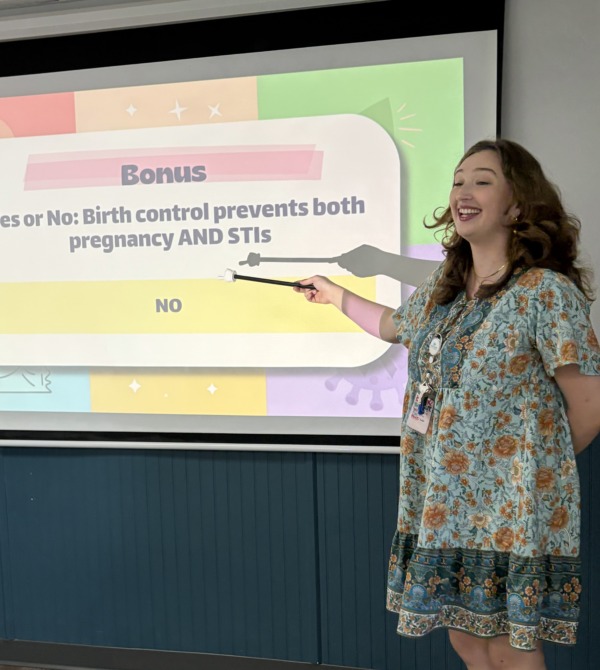
After posting about “Healthy Communication” on LinkedIn, Fowlkes was contacted by Bill Taverner, founder of the Sex Ed Lecture Series, who invited her to present the curriculum to educators, researchers, and professionals in the field.
“A professor in attendance reached out to me afterwards and asked me if she could show it to her class,” she said. “It felt like confirmation that I was doing what I was supposed to be doing.”
The experience grew Fowlkes’ confidence and reinforced her commitment to a career in sexual health education. But finding a full-time role in the field after graduation would not be easy. Sexual health education positions are relatively rare, particularly in nonprofit and community-based settings.
After a nationwide search, she found her current role teaching sexual education classes to young people and parents at a homeless shelter in Florida. The role allows her to develop and adapt evidence-based curriculum for learners at different ages and stages of life while working with communities that often face significant barriers to accessing sexual health information and resources.
In many ways, the position builds directly on the work she began through the HDFS program and SYNC internship. Her teaching centers on listening first, meeting people where they are, and helping them make informed decisions for themselves.
“What makes me hopeful is how often the people who ask me questions are fascinated by the answers,” she said. “One answered question has the potential to cause a butterfly effect that could positively impact others.”